

Artisan gelato comes under the researchers’ lens. And this time the starting point is Palermo.
Sherbeth Festival, back in the Sicilian capital from 13 to 16 November for its eighteenth edition, sets alongside its 60 international gelato makers a project that tries to look at gelato from a different angle: not merely a food to enjoy, but a food to study.
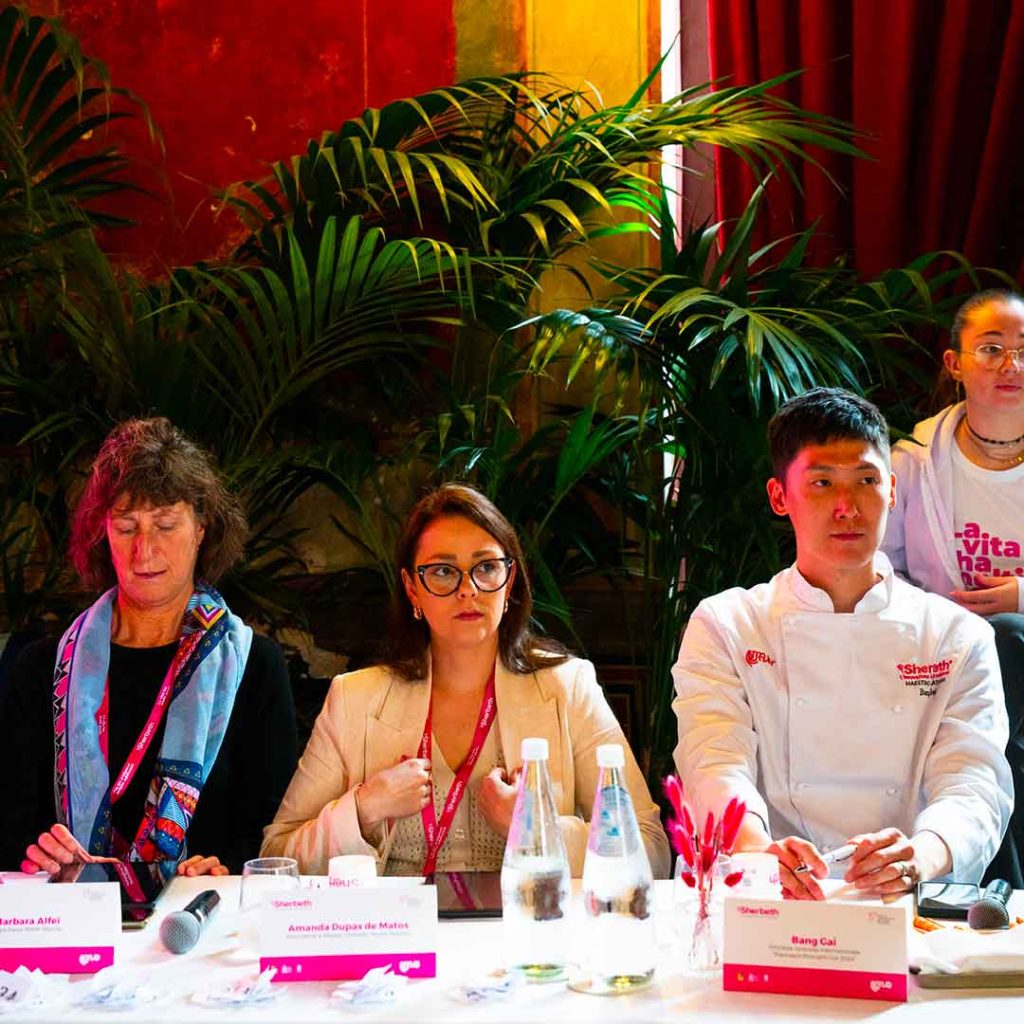
The Festival has launched a scientific programme involving CNR-IBE, the Institute of BioEconomy of the Italian National Research Council, and Massey University in New Zealand.
It is a collaboration that widens considerably the usual boundaries of an event dedicated to gelato.
With CNR-IBE the work runs through PROGEAS and the contribution of Stefano Predieri. On the other side of the world, Massey University comes in with FEAST – Food Experience and Sensory Testing Laboratory – and Amanda Dupas de Matos.
The common ground is applied food research: sensory analysis, quality, nutrition, sustainability, innovation and consumer behaviour.
Themes that may seem far removed from a gelateria counter and that, on the contrary, bear very closely on the daily work of those who make gelato.
How much does structure count in the perception of a flavour? How does liking change as the composition changes? How much do temperature, texture and aromatic intensity matter? And further: how are the expectations of the people who eat gelato changing?
These are some of the questions on which scientific research and craft can find common ground.
Sherbeth starts here, trying to give precise substance to an expression chosen to accompany the 2026 edition: Contemporary Artisanal Gelato.
The point is not to invent another category of gelato. Rather to photograph what is already happening in the most interesting gelaterie: closer attention to ingredients, research into texture, less sugar where possible, fermentation, the use of local raw materials, the recovery of ingredients and by-products, crossovers with the kitchen, and a growing sensitivity towards sustainability and nutrition.
The contemporary gelato maker still churns, tastes and adjusts. But has knowledge at hand that twenty years ago was far less accessible.
And it is precisely the relationship between craft experience and scientific knowledge that is one of the most interesting aspects of the project.
Palermo, in this sense, also offers an unusual field of observation. For four days there will be 60 gelato makers with different origins, techniques and food cultures. Their flavours draw on fruit, spices, herbs, cocoa, coffee, ferments and ingredients tied to the places they come from.
Sixty professionals also means sixty different ways of understanding sweetness, acidity, bitterness, balance and texture.
For anyone working in sensory analysis, that is interesting material. For anyone making gelato, it is a chance to compare notes that goes beyond the logic of a competition.
And this is probably where Sherbeth’s scientific project becomes most concrete.
It is not about putting a lab coat on the gelato maker, nor about turning a tub into a laboratory experiment. It is about better understanding a product that has changed a great deal in recent years and that keeps moving quickly between craft, gastronomy and research.
The collaboration with CNR-IBE and Massey University therefore tries to leave something behind after the Festival’s four days as well.
For Sherbeth it is an important change of perspective: Palermo remains the place of the celebration and of the encounter with the public, but it also becomes the place from which to start asking questions about the future of artisan gelato.
And some of the answers, this time, will come from very far away.